Retail Planograms Explained: The Blueprint Behind Retail Success
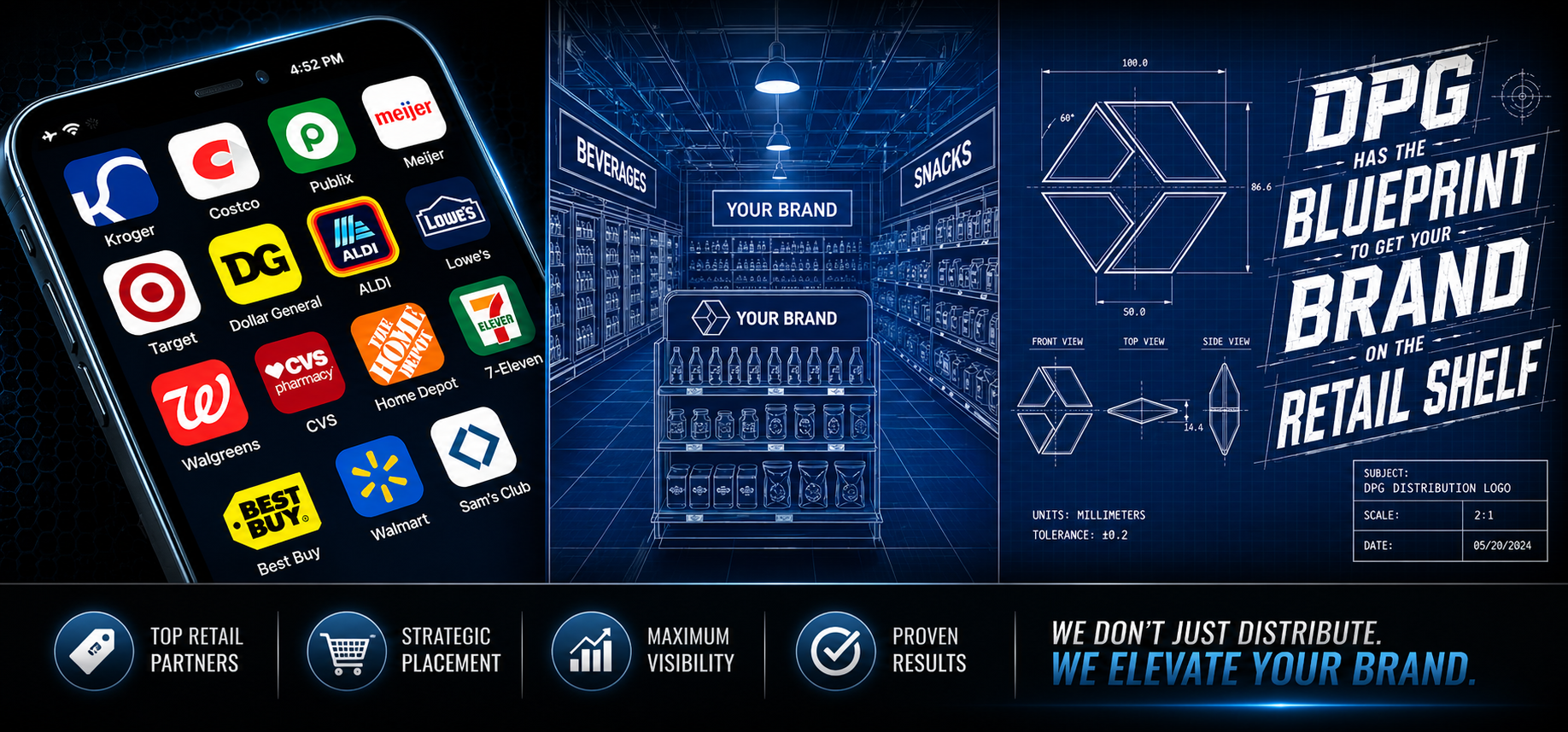
When you walk into a Walmart, Home Depot, Best Buy, or Target store, every product has a designated location. That placement isn’t random—it’s determined by a planogram, a detailed visual diagram that specifies exactly where products should be displayed on shelves, end caps, peg hooks, or promotional displays.
A well-designed planogram helps retailers maximize sales, improve the customer shopping experience, and make the most efficient use of valuable shelf space. For brands, understanding how planograms work is an important step toward succeeding in retail.
What Is a Retail Planogram?
A retail planogram is a merchandising blueprint that shows:
- Product placement on shelves
- Shelf heights and spacing
- Product facings (how many items face the customer)
- Product sequence
- Pricing label locations
- Signage placement
- Promotional display locations
- Inventory capacity
Think of it as the retailer’s instruction manual for setting up a category.
Why Retailers Use Planograms
Retailers invest significant time and resources into planograms because they:
- Increase product visibility
- Improve customer shopping flow
- Maximize sales per square foot
- Standardize stores nationwide
- Simplify store resets
- Improve inventory management
- Support promotional programs
For large chains with hundreds or thousands of locations, consistency is critical.
Common Types of Planograms
Shelf Planograms
Standard shelf layouts for products displayed in aisles.
Pegboard Planograms
Used for hardware, automotive accessories, electronics, and other hanging merchandise.
End Cap Planograms
High-visibility promotional displays located at the ends of aisles.
Quarter-Pallet Displays
Compact promotional displays designed for aisle ends or seasonal programs.
Half-Pallet Displays
Larger merchandising units used for featured promotions.
Full-Pallet Displays
Warehouse club and high-volume merchandising programs.
Floor Displays
Freestanding displays placed throughout the store.
What Is a “Facing”?
A facing is the number of product units visible to the customer from the front of the shelf.
For example:
- 1 facing = one product visible
- 3 facings = three products displayed side by side
More facings often increase product visibility and can improve sales, but shelf space is always limited.
How Brands Earn Shelf Space
Retail shelf space is competitive. Buyers evaluate factors such as:
- Consumer demand
- Sales history
- Packaging quality
- Profit margins
- Brand recognition
- Marketing support
- Category fit
- Supply chain reliability
- Retail readiness
Strong merchandising and a compelling retail strategy can significantly improve a brand’s chances of securing placement.
Preparing for a Planogram
Before approaching major retailers, brands should ensure they have:
- Retail-ready packaging
- UPC/GTIN barcodes
- Accurate product dimensions
- Case pack information
- Pallet configuration details
- High-resolution product photography
- Product specification sheets
- Sell sheets
- Merchandising display concepts
Being prepared helps retailers evaluate how your product will fit into their merchandising plans.
How DPG Distribution Helps
At DPG Distribution, we work with brands to prepare for retail by helping them develop the materials buyers expect, including:
- Retail-ready packaging
- Product specification sheets
- Professional sell sheets
- Executive sales presentations
- Merchandising concepts
- End-cap and pallet display ideas
- Retail launch strategies
While each retailer ultimately determines its own planograms and shelf layouts, presenting your product professionally and understanding how merchandising decisions are made can improve your readiness for retail conversations.
Frequently Asked Questions
What is a planogram?
A planogram is a visual merchandising guide that shows where products should be placed in a retail store.
Who creates planograms?
Retailers typically create planograms using merchandising teams, category managers, and specialized software.
Can a manufacturer decide where its product goes?
Generally, no. Retailers make final placement decisions, although manufacturers may provide merchandising recommendations or custom display concepts.
What is a shelf reset?
A shelf reset is the process of reorganizing a category according to a new planogram, often to introduce new products or improve performance.
Why are end caps valuable?
End caps receive high customer traffic and are commonly used for promotions, seasonal products, and new item launches.
Written by George W. Davison, Founder & CEO of DPG Distribution | 34+ Years of Retail Industry Experience
 Toll Free (866) 416-4297