Toll Free (866) 416-4297
Have a new product or invention you'd like to bring to market?

1P vs. 3P Retail: Understanding the Difference
Infographic outlining how to get products into Home Depot, detailing retail metrics, sales velocity multipliers, and retail readiness steps by DPG Distribution.

Choosing the Right Retail Selling Model

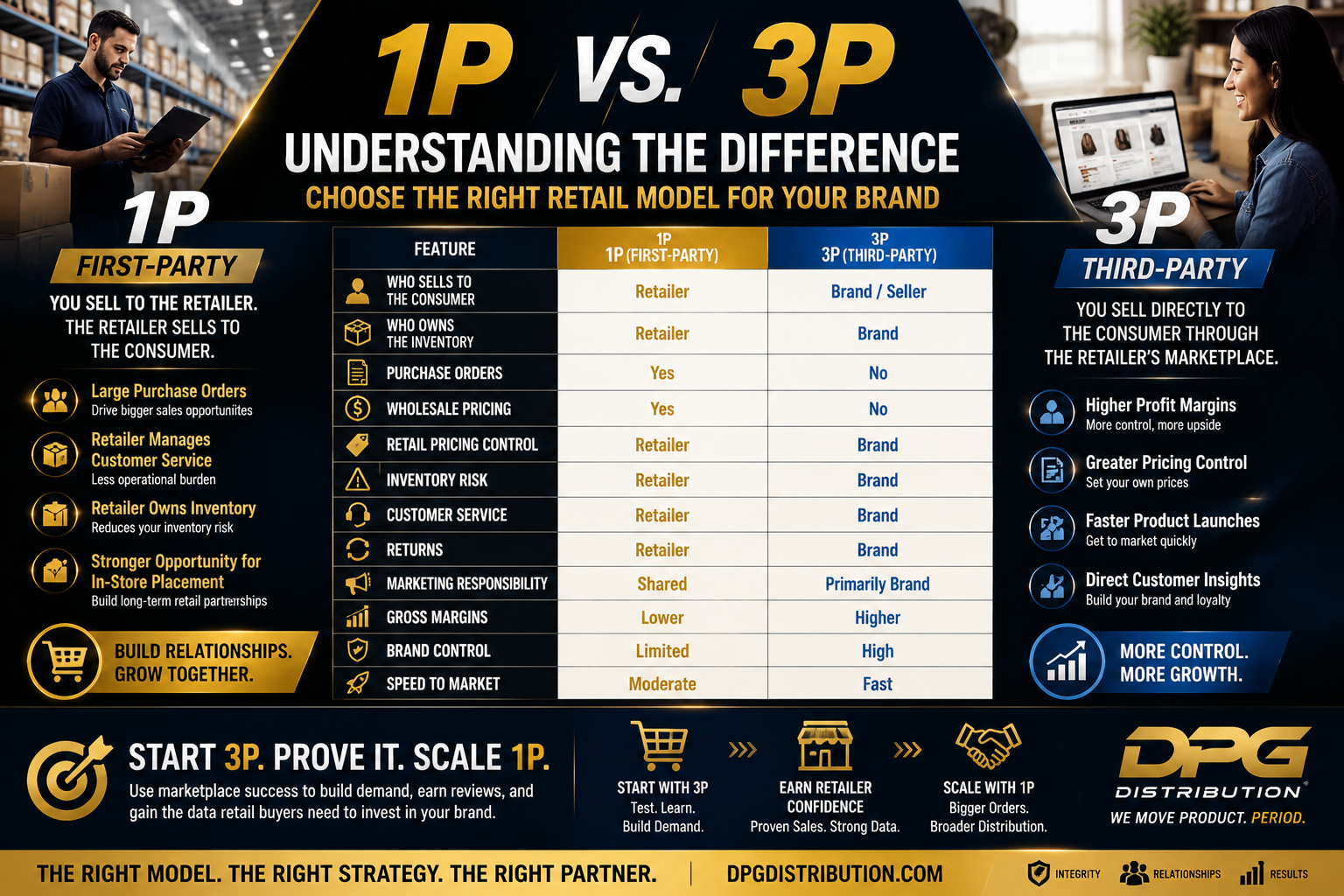
One of the first decisions brands face when entering retail is whether to sell as a First-Party (1P) supplier or a Third-Party (3P) seller. Each model offers different levels of control, responsibility, profitability, and customer experience.

Understanding these differences helps brands choose the strategy that best supports their growth objectives.

Feature1P (First-Party)3P (Third-Party)
Who Sells to the ConsumerRetailerBrand/Seller
Who Owns the InventoryRetailerBrand
Purchase OrdersYesNo
Wholesale PricingYesNo
Retail Pricing ControlRetailerBrand
Inventory RiskRetailerBrand
Customer ServiceRetailerBrand
ReturnsRetailerBrand
Marketing ResponsibilitySharedPrimarily Brand
Gross MarginsLowerHigher
Brand ControlLimitedHigh
Speed to MarketModerateFast

First-Party (1P)

With a 1P relationship, the retailer purchases your products at wholesale and becomes the seller of record. The retailer owns the inventory, determines retail pricing, and manages the customer transaction.

Advantages

  • Large purchase orders
  • Simplified order processing
  • Retailer manages customer service
  • Retailer handles payment collection
  • Greater opportunity for in-store placement
  • Long-term retail partnerships

Considerations

  • Lower gross margins
  • Less pricing control
  • Retailer determines promotions
  • Higher compliance requirements
  • Vendor onboarding can take longer

Third-Party (3P)

With a 3P relationship, your company sells directly to consumers through the retailer’s online marketplace while remaining the seller of record.

Advantages

  • Higher profit margins
  • Greater control over pricing
  • Faster product launches
  • Complete control of listings
  • Direct customer insights
  • Easier product testing before retail expansion

Considerations

  • Inventory remains your responsibility
  • Customer service obligations
  • Returns management
  • Order fulfillment
  • Marketplace performance metrics
  • Increased operational responsibility

Which Model Is Right for Your Brand?

Many successful brands begin with 3P marketplaces to validate demand, collect customer reviews, optimize pricing, and build a sales history. As sales grow, they often transition into 1P wholesale relationships, where retailers purchase inventory directly and expand distribution into physical stores.

This staged approach reduces risk while demonstrating proven consumer demand to retail buyers.

DPG Recommendation

At DPG Distribution, we often recommend using 3P marketplace sales as a stepping stone to 1P retail relationships. Strong marketplace performance can help validate your product, build brand awareness, and provide the sales data that major retailers look for when considering wholesale opportunities.

Marketplace success opens doors. First-party retail relationships help brands scale. Together, they create a powerful omnichannel growth strategy.

Written by George W. Davison, Founder & CEO of DPG Distribution | 34+ Years of Retail Industry Experience.


A sleek black and gold rectangular badge reading 'DPG Retail Ready Approved - Verified by DPG Distribution' featuring a corporate seal and verification layout.