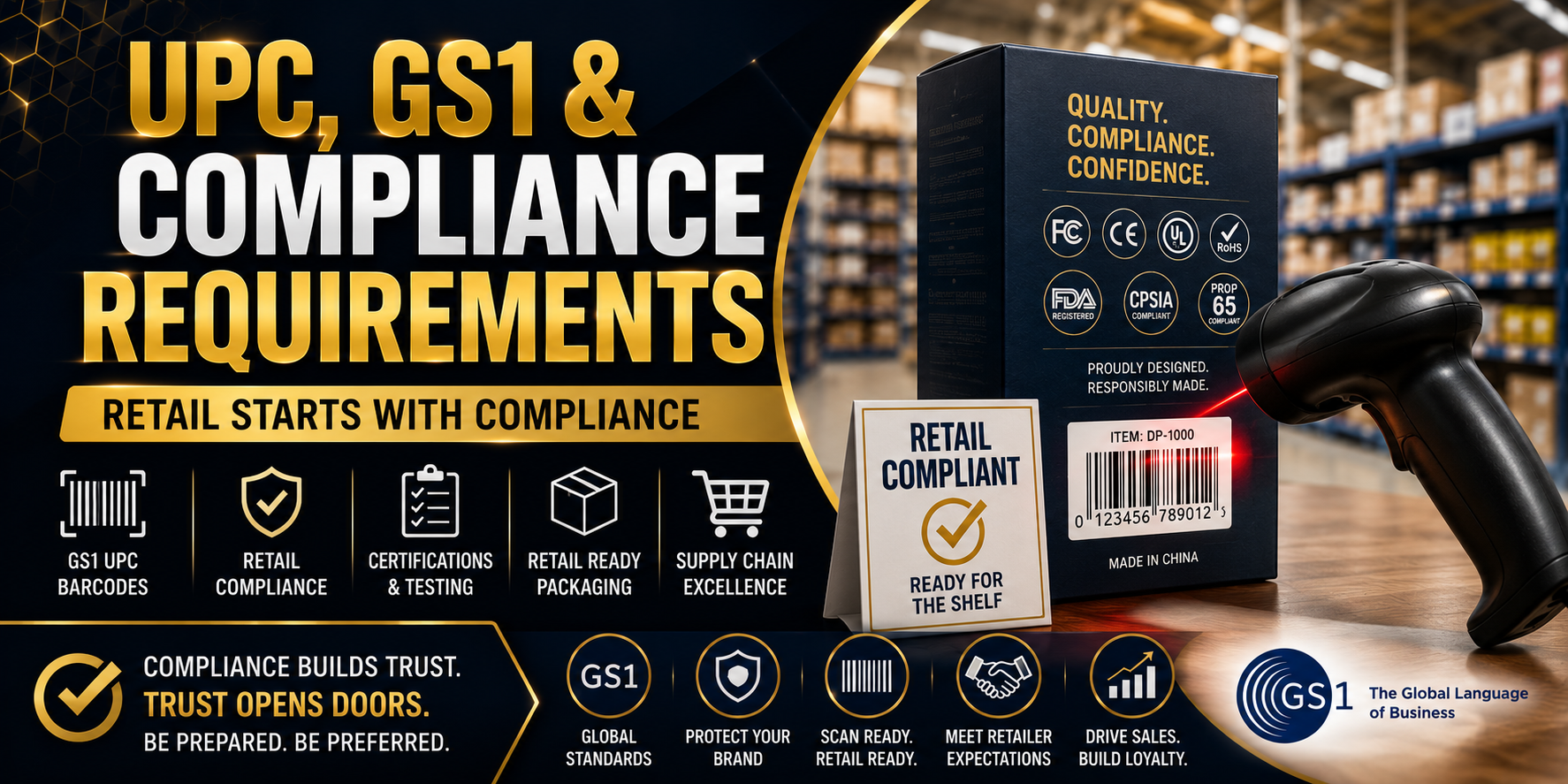
Retail Starts with Compliance
One of the fastest ways to lose credibility with a retail buyer is arriving unprepared. Major retailers expect every product to meet industry standards for identification, packaging, labeling, and supply chain compliance before it reaches their shelves.
Retail compliance isn’t optional—it’s a requirement for doing business with professional retailers.
GS1 UPC Barcodes
Every retail product should have a GS1-issued UPC barcode.
GS1 is the global organization responsible for assigning unique product identifiers used by retailers, distributors, marketplaces, and supply chain partners worldwide.
Using GS1 barcodes helps ensure:
- Global product identification
- Retail POS compatibility
- Inventory tracking
- Warehouse management
- Supply chain accuracy
- Marketplace compliance
- Retailer acceptance
Avoid purchasing unofficial UPC codes from third-party websites, as many major retailers and marketplaces require GS1-registered barcodes.
UPC Barcode Best Practices
Every sellable SKU should have its own unique UPC.
Examples include:
- Different colors
- Different sizes
- Different quantities
- Bundles
- Kits
- Gift sets
- Multi-packs
Barcodes should be:
- High contrast
- Properly sized
- Easy to scan
- Printed on a flat surface whenever possible
- Positioned according to GS1 guidelines
Always test barcode readability before production.
Product Labeling Requirements
Your packaging should clearly display:
- Product name
- Brand name
- UPC barcode
- Country of Origin
- Net weight or dimensions (when applicable)
- Safety warnings
- Required certifications
- Manufacturer or importer information
- Age recommendations (when applicable)
- Care or operating instructions
Labeling requirements vary by product category, so always verify retailer and regulatory requirements before production.
Retail Packaging Compliance
Retail-ready packaging should be:
- Durable
- Tamper-resistant when appropriate
- Easy to merchandise
- Shelf-ready
- Clearly branded
- Consumer-friendly
- Properly sealed
- Optimized for shipping and retail display
Retail buyers evaluate packaging almost as closely as the product itself.
Product Certifications
Depending on your product category, you may need certifications such as:
- FCC
- UL or ETL
- CE
- FDA registration or clearance
- CPSIA
- ASTM
- RoHS
- Prop 65 compliance
- Energy Star
- EPA requirements
Always verify which certifications apply before approaching retailers.
Retail Supply Chain Requirements
Many retailers also require:
- EDI capabilities
- Routing guide compliance
- Purchase order processing
- ASN (Advance Ship Notices)
- Case pack standards
- Master carton labeling
- Pallet configuration
- Warehouse compliance
- Vendor onboarding documentation
Being operationally prepared helps ensure a smooth launch.
Documentation Every Brand Should Have
Prepare a complete compliance file including:
- GS1 Certificate
- UPC barcode list
- Product specification sheets
- Product testing reports
- Certification documents
- Insurance certificates
- Factory audit reports (if available)
- Product liability insurance
- Country of Origin documentation
- Material Safety Data Sheets (MSDS/SDS), if applicable
DPG Recommendation
Retail buyers expect suppliers to arrive fully prepared. Investing in proper GS1 registration, UPC barcodes, compliant packaging, certifications, and supply chain documentation demonstrates professionalism and significantly increases your readiness for retail.
Compliance isn’t just about meeting requirements—it’s about building trust with retailers and creating a smooth path from your factory to the retail shelf.
Written by George W. Davison, Founder & CEO of DPG Distribution | 34+ Years of Retail Industry Experience.
 Toll Free (866) 416-4297