Toll Free (866) 416-4297
Have a new product or invention you'd like to bring to market?

QR Code Packaging Best Practices

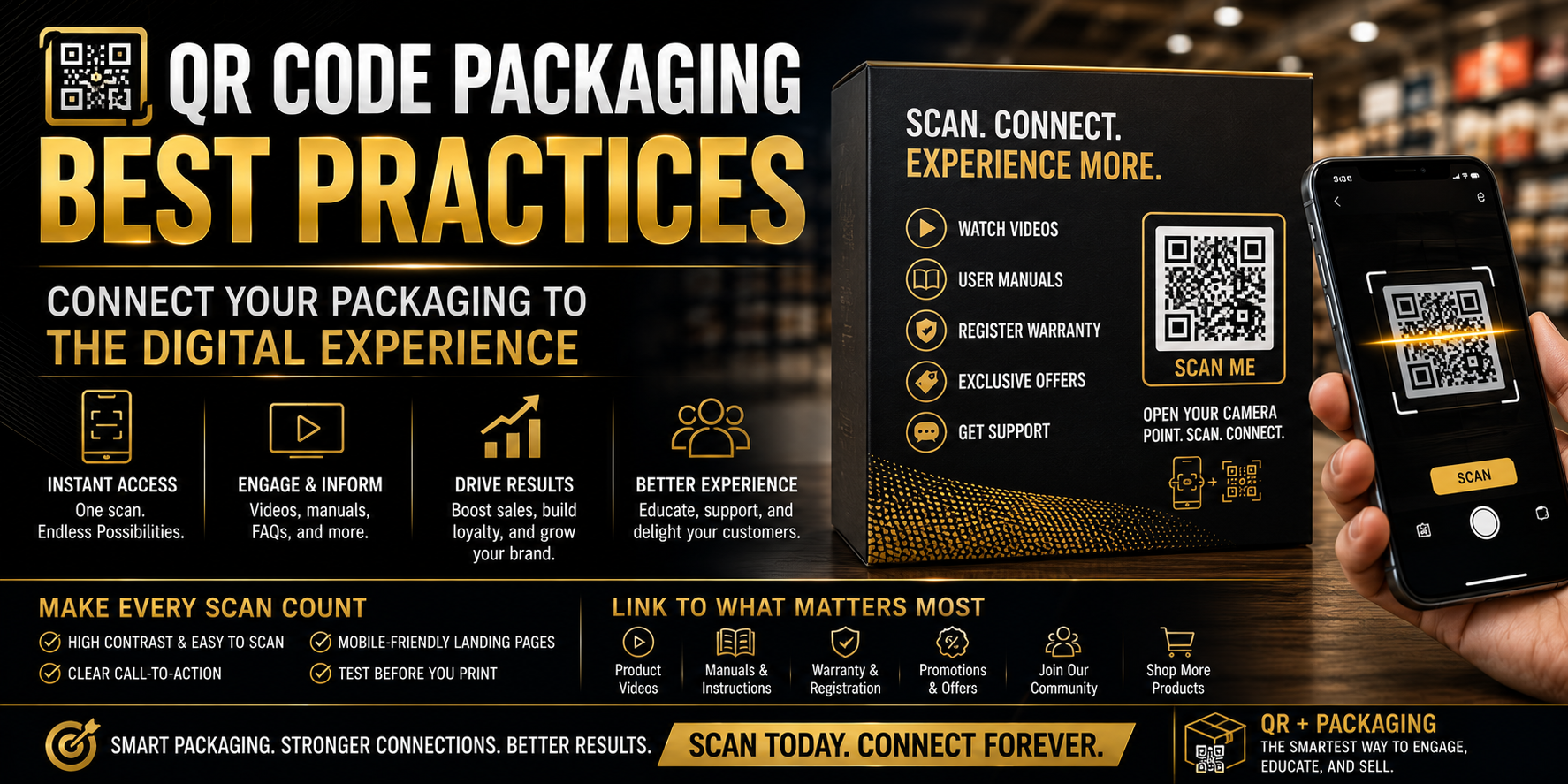
Infographic explaining QR code packaging best practices, connecting retail physical packaging to digital customer experiences by DPG Distribution.

Connect Your Packaging to the Digital Experience

A QR code transforms your product packaging from a static label into an interactive customer experience. With a simple scan, consumers can instantly access product information, demonstration videos, installation guides, warranty registration, promotions, live shopping events, and additional products.

Retailers appreciate brands that use QR codes to educate customers, reduce support requests, and increase engagement after purchase.


Why QR Codes Matter

Modern consumers expect instant access to information. QR codes provide a fast and convenient way to bridge the gap between your physical product and your digital brand experience.

Well-designed QR code programs can:

  • Increase customer engagement
  • Improve product education
  • Reduce customer support inquiries
  • Increase consumer confidence
  • Drive repeat purchases
  • Build your email database
  • Promote accessories and complementary products
  • Generate customer reviews
  • Strengthen brand loyalty

Every Brand Should Consider Linking To:

  • Product demonstration videos
  • Product registration
  • Warranty information
  • User manuals
  • Assembly instructions
  • Installation videos
  • Frequently Asked Questions (FAQs)
  • Safety information
  • Replacement parts
  • Customer support
  • Live Shopping on Streaming TV
  • Product reviews
  • Retail promotions
  • Social media channels
  • Your website
  • Product specification sheets
  • Additional product collections

Placement Best Practices

Position QR codes where they are easy to find and scan.

Recommended locations include:

  • Product packaging
  • Product labels
  • Instruction manuals
  • Hang tags
  • Retail display signage
  • Shelf talkers
  • End-cap displays
  • Pallet displays
  • Counter displays
  • Product inserts
  • Warranty cards

Avoid placing QR codes on curved surfaces, reflective materials, or areas that may become damaged during shipping.


QR Code Design Tips

For the best customer experience:

  • Use high-contrast colors (black on white performs best)
  • Leave sufficient white space around the code
  • Test the code on multiple mobile devices
  • Use dynamic QR codes when possible
  • Keep landing pages mobile-friendly
  • Make sure the destination loads quickly
  • Include a short call-to-action near the QR code

Examples:

  • Watch Product Demo
  • Scan to Register Your Product
  • See It In Action
  • Shop Now
  • Watch Live
  • Learn More

Measure Performance

Track QR code performance to better understand customer engagement.

Monitor:

  • Total scans
  • Unique visitors
  • Time of day
  • Geographic locations
  • Conversion rates
  • Product registrations
  • Video views
  • Purchases
  • Customer retention

The data collected can help improve future packaging, marketing campaigns, and retail merchandising.


DPG Recommendation

QR codes should be considered a standard feature on modern retail packaging. They provide an affordable and effective way to extend the customer experience beyond the shelf while supporting retail, eCommerce, and Live Shopping initiatives.

When implemented correctly, QR codes transform packaging into an interactive marketing tool that educates consumers, builds trust, increases engagement, and drives additional sales.

Your packaging shouldn’t just hold your product—it should connect customers to your entire brand experience.

Written by George W. Davison, Founder & CEO of DPG Distribution | 34+ Years of Retail Industry Experience


A sleek black and gold rectangular badge reading 'DPG Retail Ready Approved - Verified by DPG Distribution' featuring a corporate seal and verification layout.