 Toll Free (866) 416-4297
About DPG
- DPG Retail Ready™
- About DPG
- Categories We Sell
- Who We Call On
- Why Use DPG Distribution?
- Mission and Objectives
- Industry Leader
- Your Company Extension
- Your Partner in Retail Growth
- DPG Core Values
- Meet Our CEO
- Sell your Brand on TV
- Sell your Brand in Brazil
- Video Library
- News and Trade Shows
- DPG Brand Book
- Submit Your Product | Brand
- DPG Sales Representatives
- Line Card
- Strategic EDI Partner | SPS Commerce
DPG Retail Glossary™
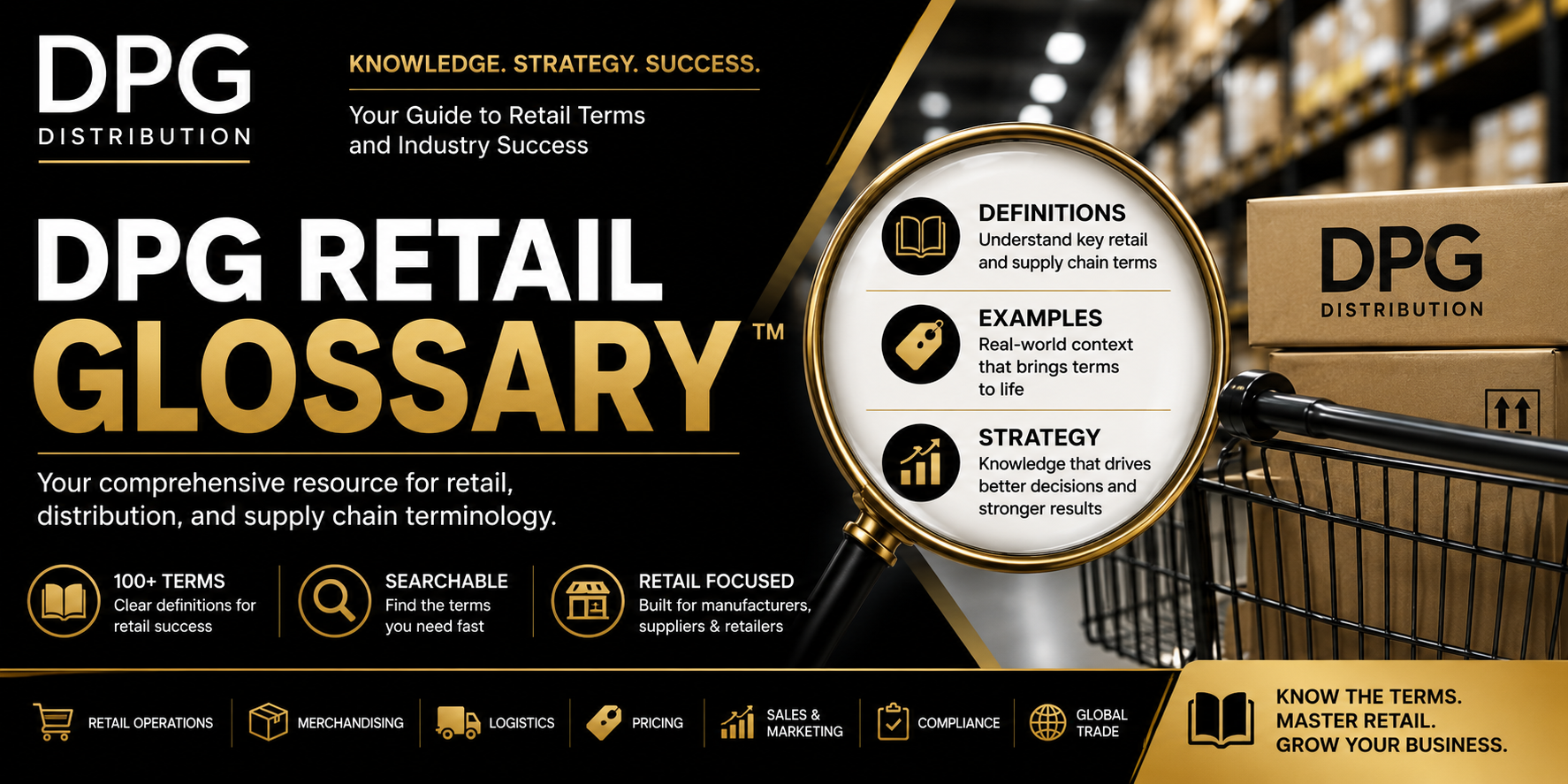
The retail industry has its own language, and understanding that language is essential for success. Whether you’re a manufacturer, entrepreneur, distributor, importer, retailer, or sales professional, knowing key retail and supply chain terminology can help you communicate more effectively, avoid costly mistakes, and make better business decisions. The DPG Retail Glossary™ was created to provide clear, easy-to-understand definitions of the most important terms used throughout the retail industry.
Our glossary covers everything from UPC barcodes, GS1, EDI, purchase orders (POs), planograms, vendor compliance, retail margins, logistics, merchandising, inventory management, and distribution to the many operational and sales terms you’ll encounter when working with major retailers. Each definition is written in plain English and reflects real-world retail practices, making this resource valuable for both newcomers and experienced professionals.
As DPG Distribution continues to expand this glossary, our goal is to build one of the most comprehensive retail knowledge resources available online. Whether you’re preparing your brand to become Retail Ready™, learning how major retailers operate, or simply looking up an unfamiliar industry term, the DPG Retail Glossary™ is designed to help you build your retail knowledge and grow your business with confidence.
A
ASN (Advance Ship Notice)
An electronic document sent by a supplier to a retailer before a shipment arrives, detailing the products, quantities, cartons, pallet information, and expected delivery date. ASNs help retailers prepare for incoming inventory and are often required through EDI.
AUR (Average Unit Retail)
The average selling price of a product within a retail category. Retail buyers use AUR to evaluate pricing strategies, profit potential, and product positioning.
Assortment Planning
The process of selecting the right mix of products, sizes, colors, and styles that will be offered to customers in stores or online to maximize sales and profitability.
Authorized Distributor
A distributor that has been officially approved by a manufacturer to sell and support its products within a designated market or territory.
Authorized Retailer
A retail business that has been approved by a manufacturer to sell genuine products while meeting brand standards, pricing policies, and customer service expectations.
B
Barcode
A machine-readable code, such as a UPC, printed on product packaging that allows retailers to identify, price, track, and manage inventory throughout the supply chain.
Big Box Retailer
A large-format retail chain that operates high-volume stores, such as Walmart, Costco, Home Depot, Lowe’s, Target, or Best Buy.
Bill of Lading (BOL)
A legal shipping document issued by a carrier that serves as a receipt for goods, outlines shipment details, and acts as a contract between the shipper and the carrier.
Brand Registry
A program, such as Amazon Brand Registry, that helps manufacturers protect their trademarks, prevent counterfeit products, and gain access to enhanced brand management tools.
Brick-and-Mortar Retail
Traditional physical retail stores where customers shop in person rather than purchasing products online.
Buyer
The individual responsible for selecting and purchasing products for a retailer. Buyers evaluate products based on sales potential, margins, consumer demand, and overall fit within their merchandise assortment.
Buyer Meeting
A scheduled presentation where a manufacturer or sales representative introduces products to a retail buyer in hopes of securing shelf space, online listings, or purchase orders.
Buying Group
An organization that combines the purchasing power of multiple independent retailers to negotiate better pricing, promotions, and supplier terms.
Buying Office
The department within a retailer responsible for product sourcing, vendor relationships, pricing decisions, and merchandise selection.
C
Category Captain
A manufacturer chosen by a retailer to provide category insights, sales data, and merchandising recommendations to help improve the performance of an entire product category.
Category Management
The strategic process of managing product categories as individual business units to maximize sales, profitability, and customer satisfaction.
Chargeback
A financial penalty imposed by a retailer when a supplier fails to meet shipping, packaging, labeling, EDI, or compliance requirements.
Club Store
A membership-based retailer, such as Costco, Sam’s Club, or BJ’s Wholesale Club, that sells products in bulk at discounted prices.
Commission Sales Representative
An independent sales professional or agency that earns compensation based on a percentage of product sales rather than receiving a salary.
Compliance
The process of meeting all retailer requirements related to packaging, labeling, shipping, EDI, product safety, and vendor policies.
Consumer Packaged Goods (CPG)
Everyday products that consumers purchase regularly, including food, beverages, personal care items, household goods, and health products.
Consumer Electronics
Electronic devices intended for personal use, including televisions, speakers, smart home products, mobile accessories, computer peripherals, and wearable technology.
Cross Dock
A logistics process where products move directly from inbound trucks to outbound trucks with little or no warehouse storage, reducing handling time and inventory costs.
Cross Merchandising
The practice of displaying complementary products together to encourage additional purchases, such as batteries displayed next to flashlights.
D
Dealer Network
A group of authorized dealers or retailers that distribute and sell a manufacturer’s products within designated markets or territories.
Demand Planning
The forecasting process used to estimate future customer demand so manufacturers and retailers can maintain proper inventory levels.
Direct Import
Products purchased directly from an overseas manufacturer without using a domestic distributor or intermediary.
Direct Store Delivery (DSD)
A distribution method in which products are delivered directly to individual retail stores instead of passing through a retailer’s distribution center.
Distributor
A company that purchases products from manufacturers, warehouses inventory, and resells products to retailers, dealers, or other businesses.
Distribution Center (DC)
A warehouse used by retailers or distributors to receive, store, and ship products efficiently to stores or customers.
Distribution Agreement
A legal contract outlining the rights, responsibilities, pricing, territories, and terms between a manufacturer and its distributor.
Drop Shipping
An order fulfillment method in which products are shipped directly from the manufacturer or supplier to the customer without the retailer holding inventory.
E
E-Commerce
The buying and selling of products over the internet through online stores, marketplaces, or mobile applications. E-commerce allows brands to reach customers directly or through retailers such as Amazon, Walmart Marketplace, and Target Plus.
EDI (Electronic Data Interchange)
A standardized electronic system that allows retailers, distributors, and suppliers to exchange business documents such as purchase orders, invoices, advance ship notices (ASNs), and shipping confirmations without manual data entry. Many major retailers require EDI before onboarding new vendors.
End Cap Display
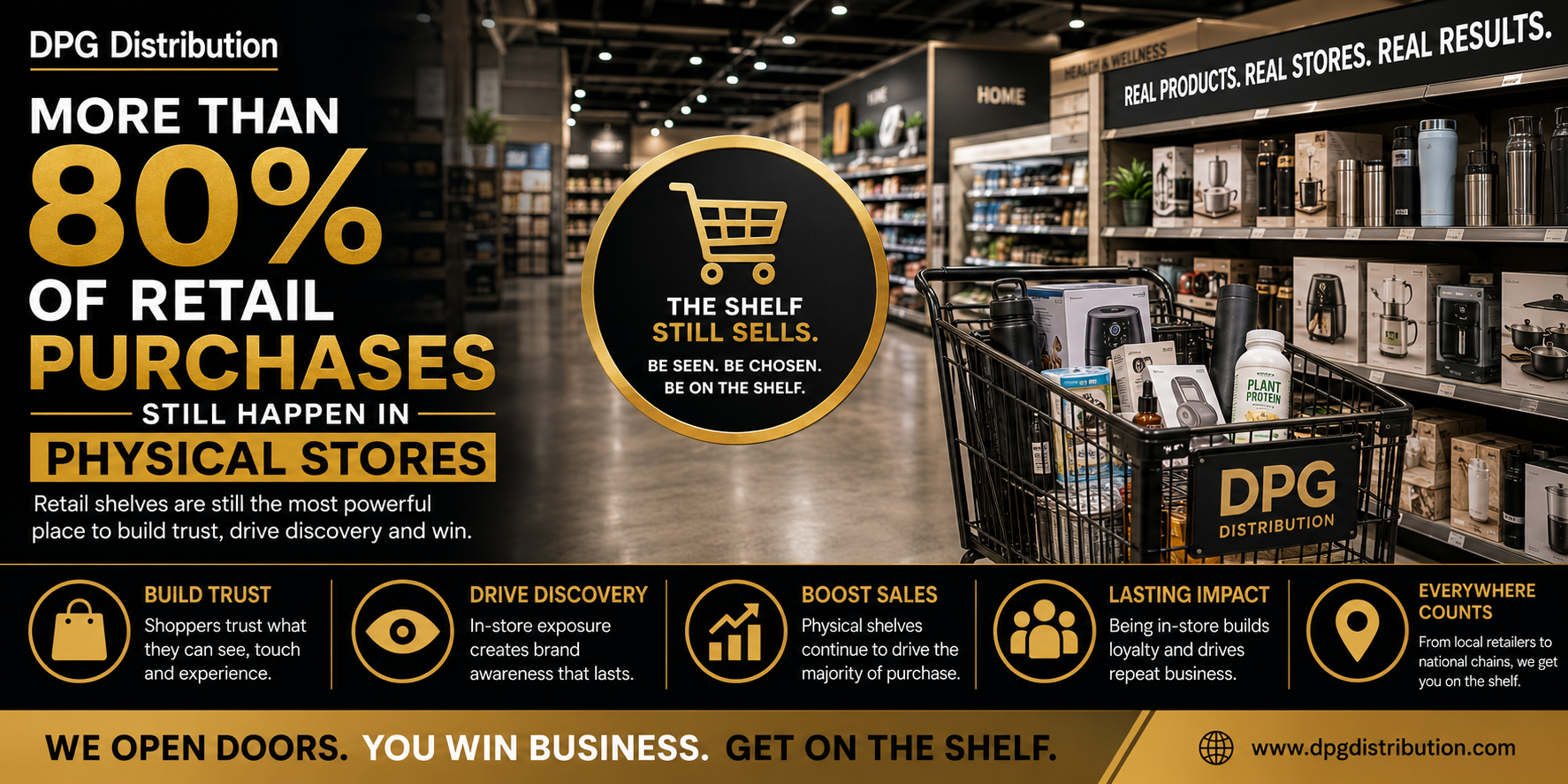
A promotional product display located at the end of a retail aisle. End caps receive high customer traffic and are often used to feature new products, seasonal promotions, or best-selling items.
Everyday Low Price (EDLP)
A retail pricing strategy that maintains consistently low prices instead of relying on frequent promotions or temporary sales. Retailers such as Walmart are well known for using an EDLP strategy.
Exclusive Distribution
A business arrangement where a manufacturer grants one distributor, sales representative, or retailer the exclusive right to sell its products within a specific territory, market, or sales channel.
F
Factory Audit
A detailed evaluation of a manufacturing facility to verify quality control systems, production capabilities, labor practices, safety standards, and regulatory compliance before products are approved for retail distribution.
Fill Rate
The percentage of customer orders that are shipped completely and on time without backorders or shortages. A high fill rate demonstrates supply chain reliability and is an important performance metric for retailers.
First Cost
The initial price paid by a retailer or distributor to purchase a product from the manufacturer before adding shipping, tariffs, marketing allowances, or other costs.
FOB (Free on Board)
An international shipping term that defines when ownership, responsibility, and risk transfer from the seller to the buyer during transportation. Common examples include FOB Origin and FOB Destination.
Forecasting
The process of estimating future product demand using historical sales data, market trends, seasonal patterns, and retailer expectations to improve inventory planning and production scheduling.
Freight Collect
A shipping arrangement where the buyer is responsible for paying all freight and transportation charges upon delivery.
Freight Prepaid
A shipping arrangement where the seller pays the transportation costs before the shipment leaves the warehouse, often including those costs within the product pricing agreement.
G
General Merchandise
A broad category of non-food consumer products sold through retail stores, including housewares, electronics, toys, sporting goods, home décor, office supplies, seasonal merchandise, and more.
Global Trade Item Number (GTIN)
A globally recognized product identification number issued through GS1. GTINs uniquely identify products and are used by retailers, distributors, and online marketplaces to manage inventory and product listings.
Gondola Display
A freestanding retail shelving fixture commonly found throughout stores. Gondolas are designed to display products efficiently while maximizing shelf space and customer visibility.
Gross Margin
The percentage of revenue remaining after subtracting the cost of goods sold (COGS). Gross margin measures product profitability before operating expenses, marketing costs, and overhead.
GS1
The international standards organization responsible for issuing UPC barcodes, GTINs, and global identification standards used throughout the retail supply chain. Most major retailers require GS1-issued barcodes for new product listings.
H
Hardlines
A retail category consisting of durable consumer goods such as hardware, tools, automotive products, appliances, sporting goods, outdoor equipment, and consumer electronics, as opposed to soft goods like apparel.
Hazardous Materials Compliance
The process of ensuring products containing batteries, chemicals, aerosols, or other regulated materials meet all transportation, storage, labeling, and safety regulations required by government agencies and retailers.
High Velocity Item
A product that sells quickly and consistently, requiring frequent replenishment due to strong consumer demand. Retail buyers often prioritize high-velocity items because they maximize inventory turnover and shelf productivity.
I
Importer of Record (IOR)
The individual or company legally responsible for importing products into a country. The Importer of Record ensures all customs documentation is completed, duties and taxes are paid, and products comply with all applicable import regulations before entering the market.
In-Store Display
A custom retail fixture or merchandising display designed to showcase products within a store. Effective in-store displays increase product visibility, encourage impulse purchases, and help brands stand out from competitors.
Inventory Turnover
A key retail performance metric that measures how many times inventory is sold and replaced during a specific period. Higher inventory turnover generally indicates strong sales and efficient inventory management.
Item Setup
The process of creating a new product within a retailer’s purchasing and inventory system. Item setup typically includes UPC codes, product specifications, pricing, dimensions, images, packaging details, and vendor information before a product can be ordered or sold.
J
Jobber
A wholesale distributor that purchases products in bulk from manufacturers and resells them in smaller quantities to retailers, contractors, installers, or dealers. Jobbers are common in industries such as automotive, hardware, electrical, and industrial supplies.
Just-In-Time Inventory (JIT)
An inventory management strategy where products are received only as needed for production or customer demand. JIT helps reduce warehouse costs and excess inventory but requires accurate forecasting and reliable suppliers.
K
Key Account
A major customer or retailer that generates significant sales volume and is strategically important to a manufacturer. National retailers such as Walmart, Costco, Home Depot, Lowe’s, and Target are often considered key accounts.
Key Account Manager
A sales professional responsible for managing relationships with a company’s most important retail customers. Key Account Managers coordinate product launches, negotiate business terms, monitor performance, and develop long-term growth strategies.
KPI (Key Performance Indicator)
A measurable value used to evaluate business performance. Common retail KPIs include sales growth, gross margin, inventory turnover, fill rate, order accuracy, on-time delivery, and product sell-through.
L
Lead Time
The total amount of time required from placing an order until the product is delivered and available for sale. Lead time includes manufacturing, transportation, customs clearance (if applicable), and warehouse processing.
Line Review
A formal meeting between a manufacturer or sales representative and a retail buyer to present products for potential placement. During a line review, buyers evaluate pricing, packaging, margins, product differentiation, inventory availability, and overall fit within their merchandise assortment.
Logistics
The planning, coordination, transportation, warehousing, and delivery of products throughout the supply chain. Efficient logistics ensure products reach retailers and consumers accurately, on time, and at the lowest practical cost.
Loss Leader
A product intentionally sold at a very low price—or sometimes below cost—to attract customers into a store or website with the expectation that they will purchase additional, higher-margin products.
M
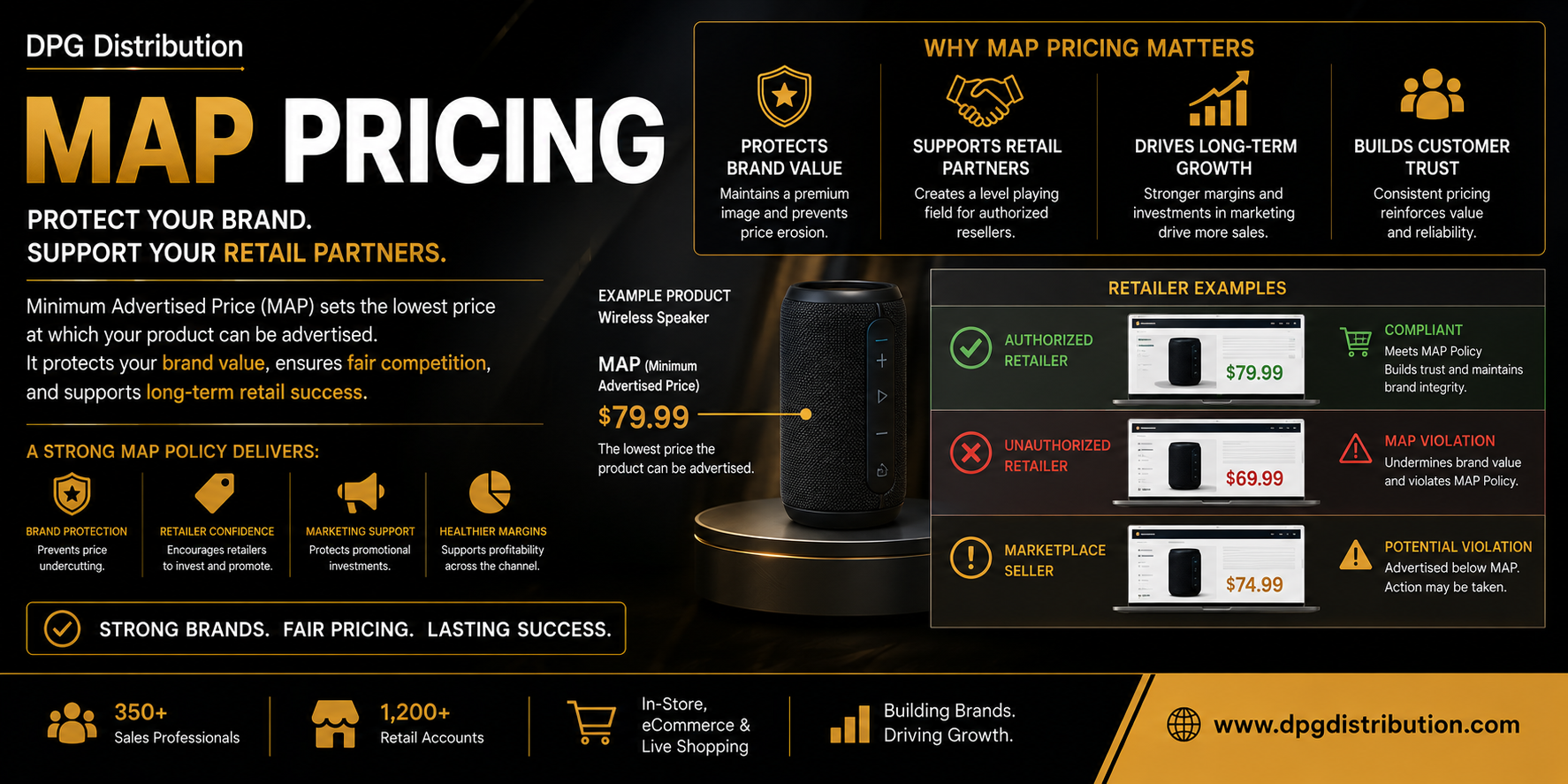
MAP (Minimum Advertised Price)
The lowest price a manufacturer allows its products to be advertised by retailers or online sellers. MAP policies help protect brand value, maintain fair competition among resellers, and prevent excessive discounting. While retailers may sell below MAP in certain situations, they generally cannot advertise prices below the established minimum.
Manufacturer
A company that designs, develops, and produces products for sale to distributors, retailers, or consumers. Manufacturers may produce goods domestically or internationally and are responsible for product quality, compliance, and supply chain management.
Manufacturer’s Representative
An independent sales professional or sales agency that represents one or more manufacturers and earns commissions on product sales. Manufacturer’s representatives leverage established retail relationships to introduce products to buyers, negotiate opportunities, and help brands grow without the cost of maintaining a full-time sales force.
Marketplace
An online platform where multiple third-party sellers offer products directly to consumers. Examples include Amazon Marketplace, Walmart Marketplace, Target Plus, Best Buy Marketplace, Lowe’s Marketplace, and Home Depot Marketplace.
Master Carton
The outer shipping carton used to package multiple retail units together for transportation and warehouse distribution. Master cartons must meet retailer specifications for dimensions, labeling, weight, and durability to minimize shipping damage and improve warehouse efficiency.
Merchandising
The strategic presentation, pricing, placement, and promotion of products to maximize customer engagement and sales. Effective merchandising includes shelf placement, displays, signage, product assortment, and promotional planning.
MOQ (Minimum Order Quantity)
The smallest quantity of product a manufacturer is willing to produce or sell in a single order. MOQs help manufacturers maintain production efficiency while allowing buyers to understand minimum purchasing requirements.
MSRP (Manufacturer’s Suggested Retail Price)
The retail price recommended by the manufacturer for consumer sales. MSRP provides pricing guidance to retailers but does not legally require retailers to sell at that price unless otherwise restricted by applicable laws.
Multi-Channel Retail
A retail strategy where products are sold through multiple sales channels, such as physical stores, e-commerce websites, online marketplaces, distributors, dealers, and catalog sales. Multi-channel selling expands customer reach while diversifying revenue opportunities.
N
National Retailer
A retail company that operates stores or e-commerce platforms across multiple states or throughout the country. National retailers typically have centralized buying offices, standardized vendor requirements, and extensive distribution networks.
Net Terms
The agreed-upon payment period between a buyer and supplier. Common examples include Net 30, Net 45, or Net 60, meaning payment is due within 30, 45, or 60 days after the invoice date.
New Item Setup
The process of introducing a new product into a retailer’s inventory system. This includes product specifications, UPC information, pricing, dimensions, case pack details, images, EDI setup, and vendor documentation before purchase orders can be issued.
O
Omnichannel Retail
A retail strategy that creates a seamless shopping experience across all sales channels, including physical stores, e-commerce websites, online marketplaces, mobile apps, social commerce, and live shopping. Customers can interact with a brand wherever they choose while enjoying a consistent experience.
Open-to-Buy (OTB)
A retail inventory budgeting system that determines how much merchandise a buyer can purchase within a specific time period while staying within financial and inventory goals.
Order Fulfillment
The complete process of receiving, processing, picking, packing, shipping, and delivering customer or retailer orders accurately and on time. Efficient fulfillment is essential for maintaining customer satisfaction and retailer performance standards.
Out-of-Stock (OOS)
A situation where inventory is unavailable when customers or retailers are ready to purchase. Frequent out-of-stock conditions can reduce sales, damage customer loyalty, and negatively impact retailer relationships.
OTIF (On Time In Full)
A supply chain performance metric measuring whether shipments arrive by the required delivery date and contain the complete order without shortages or errors. Many major retailers use OTIF scores to evaluate supplier performance and may assess chargebacks for poor performance.
P
Packaging Compliance
The process of ensuring product packaging meets all retailer, industry, and regulatory requirements. This includes labeling, UPC barcodes, warning statements, sustainability standards, packaging durability, and shipping specifications.
Pallet Configuration
The standardized arrangement of master cartons on a shipping pallet based on retailer requirements. Proper pallet configuration improves warehouse handling, transportation efficiency, and product protection during shipment.
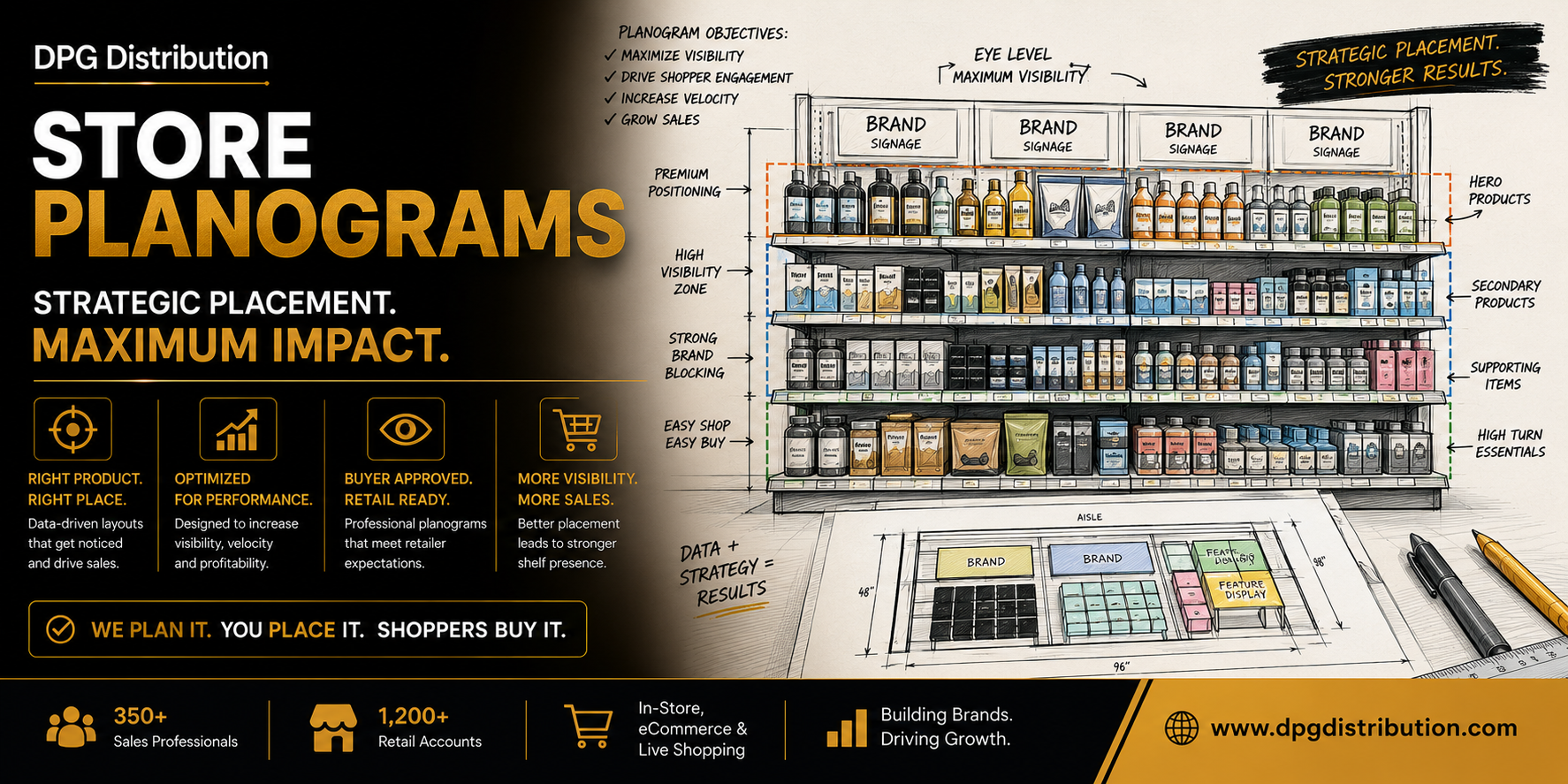
Planogram
A detailed visual diagram showing exactly where products should be placed on retail shelves or displays. Planograms are used to maximize product visibility, optimize shelf space, and improve sales performance.
Point of Purchase (POP)
Marketing materials or displays located near the checkout area or product location that encourage impulse purchases and increase product visibility.
Point of Sale (POS)
The location where a retail transaction is completed. POS can refer to the physical checkout area, self-checkout station, or the software and hardware systems used to process customer purchases.
PO (Purchase Order)
An official document issued by a retailer or buyer authorizing the purchase of products from a supplier. A purchase order specifies product quantities, pricing, delivery dates, payment terms, shipping instructions, and other transaction details.
Price Point
The specific retail selling price at which a product is offered to consumers. Selecting the right price point is critical for attracting customers while maintaining healthy profit margins and remaining competitive within the market.
Product Specification Sheet
A detailed technical document outlining a product’s features, dimensions, materials, weight, certifications, packaging, compliance information, UPC codes, and other specifications required by retailers and distributors during product evaluation.
Profit Margin
The percentage of revenue remaining after deducting costs associated with producing and selling a product. Healthy profit margins are essential for manufacturers, distributors, and retailers to sustain long-term business growth.
Promotional Allowance
Financial support provided by a manufacturer to a retailer for advertising, product promotions, special pricing events, displays, or marketing campaigns designed to increase product visibility and sales.
Q
QR Code Packaging
Packaging that includes a QR (Quick Response) code customers can scan with a smartphone to access product manuals, warranty registration, installation videos, assembly instructions, promotions, or additional product information. QR codes help bridge the gap between physical products and digital experiences.
Quality Assurance (QA)
A systematic process used to ensure products consistently meet quality standards, customer expectations, and regulatory requirements before reaching retailers or consumers. QA includes product testing, inspections, documentation, and continuous improvement.
R
Reorder Point
The inventory level at which a new purchase order should be placed to replenish stock before it runs out. Proper reorder points help prevent out-of-stock situations while minimizing excess inventory.
Retail Buyer
A professional responsible for selecting, purchasing, and managing the products sold by a retailer. Retail buyers evaluate product quality, pricing, consumer demand, profit margins, inventory availability, and overall fit within their merchandise assortment.
Retail Broker
An independent sales organization that represents manufacturers by introducing products to retailers, managing buyer relationships, and negotiating sales opportunities. Retail brokers typically earn commissions based on product sales.
Retail Compliance
The process of meeting all operational, packaging, labeling, shipping, EDI, safety, and vendor requirements established by retailers. Failure to comply may result in chargebacks, shipment delays, or rejected orders.
Retail Distribution
The movement of products from manufacturers through distributors, wholesalers, or directly to retailers for sale to consumers. Effective retail distribution ensures products are available where and when customers want to buy them.
Retail Margin
The percentage of profit a retailer earns on the sale of a product after accounting for its purchase cost. Retail buyers carefully evaluate margins when deciding whether to add a product to their assortment.
Retail Packaging
Packaging specifically designed to protect products, communicate brand value, comply with retailer requirements, and attract consumers on store shelves or online marketplaces.
Retail Ready™
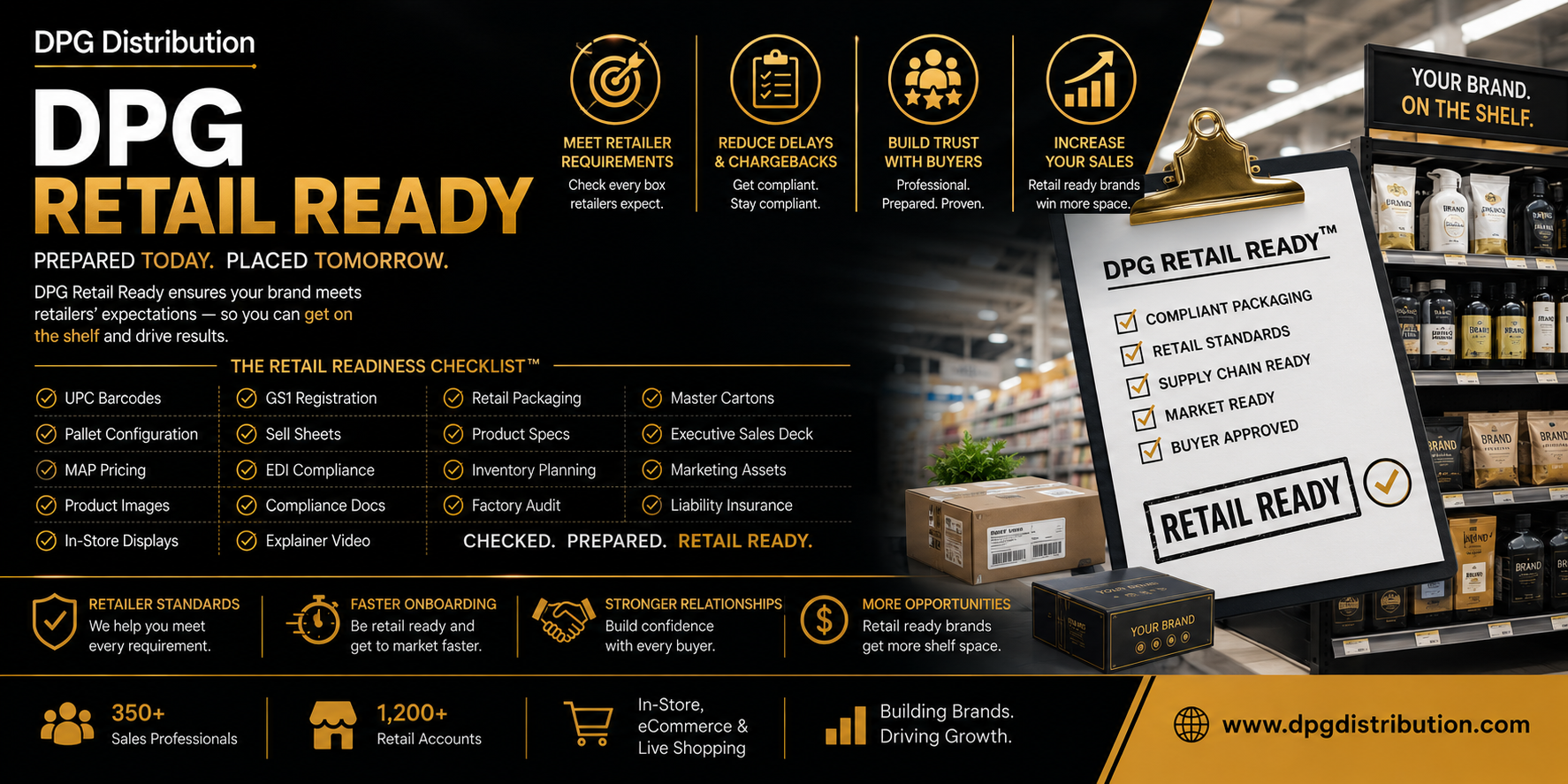
A DPG Distribution program designed to help manufacturers prepare their products for successful retail placement. Retail Ready™ focuses on packaging, pricing, compliance, logistics, marketing materials, and operational readiness to meet the expectations of major retailers.
Retail Reset
A scheduled update of a retailer’s shelves or merchandising layout. During a reset, products may be added, removed, relocated, or reorganized according to a new planogram.
Retail Sales Representative
A professional who represents manufacturers by presenting products to retail buyers, developing customer relationships, negotiating opportunities, and helping brands grow sales across multiple retail channels.
Return Merchandise Authorization (RMA)
A formal approval process allowing customers or retailers to return products for replacement, repair, credit, or refund according to a manufacturer’s return policy.
S
Sales Representative
An individual or agency that promotes and sells products on behalf of manufacturers to retailers, distributors, dealers, or other business customers, typically earning a commission on successful sales.
Sales Territory
The geographic region, customer segment, or group of accounts assigned to a sales representative or agency for business development and account management.
Sell Sheet
A concise one- or two-page sales document highlighting a product’s features, benefits, specifications, pricing, and competitive advantages. Sell sheets are commonly used during buyer presentations and trade shows.
Shelf Placement
The specific location where a product is displayed within a retail store. Eye-level and end-cap placements generally generate higher customer visibility and increased sales.
SKU (Stock Keeping Unit)
A unique inventory identifier assigned by a retailer or manufacturer to distinguish individual products based on characteristics such as size, color, style, or packaging configuration.
Slotting Fee
A fee charged by some retailers to manufacturers for placing new products on store shelves or within specific merchandising locations. Slotting fees help offset the retailer’s costs associated with introducing new products.
Softlines
A retail category consisting primarily of apparel, footwear, fashion accessories, textiles, bedding, and other fabric-based merchandise.
Store Reset
The process of reorganizing retail shelves and displays to accommodate new products, seasonal merchandise, updated planograms, or revised merchandising strategies.
Supply Chain
The complete network involved in designing, manufacturing, transporting, warehousing, distributing, and delivering products from raw materials to the end consumer.
T
Target Margin
The desired profit percentage established by a manufacturer, distributor, or retailer when pricing products. Target margins help businesses maintain profitability while remaining competitive in the marketplace.
Third-Party Logistics (3PL)
A company that provides outsourced logistics services such as warehousing, inventory management, order fulfillment, transportation, and distribution on behalf of manufacturers and retailers.
Trade Promotion
Marketing programs funded by manufacturers to encourage retailers to increase product sales through discounts, advertising, displays, rebates, or special merchandising events.
Trade Show
An industry event where manufacturers, distributors, retailers, and buyers meet to showcase products, discover new suppliers, network, and develop business relationships.
Turn Rate
A measurement of how quickly inventory is sold and replenished during a given period. Higher turn rates generally indicate stronger product demand and more efficient inventory management.
U
UPC Barcode
A Universal Product Code printed on retail packaging that uniquely identifies products for inventory management, scanning, pricing, and point-of-sale transactions.
Unit Cost
The total cost to manufacture or purchase one individual product before markup, shipping, or additional operating expenses.
Unit Retail
The final selling price of one individual product to the consumer.
Universal Product Code (UPC)
A globally recognized barcode system used by retailers and manufacturers to identify, track, and manage products throughout the retail supply chain.
V
Vendor
A manufacturer, supplier, or distributor that sells products or services to retailers, wholesalers, or other businesses.
Vendor Agreement
A legally binding contract outlining the responsibilities, pricing, payment terms, compliance requirements, shipping obligations, and business relationship between a vendor and a retailer or distributor.
Vendor Compliance
A retailer’s operational standards that vendors must follow regarding packaging, labeling, shipping, EDI transactions, delivery schedules, and documentation. Compliance helps maintain efficient supply chain operations and reduces costly errors.
Vendor Managed Inventory (VMI)
An inventory management system in which the supplier monitors stock levels and replenishes inventory for the retailer based on agreed-upon inventory targets and sales data.
Vendor Number
A unique identification number assigned by a retailer to an approved supplier for purchasing, invoicing, payment processing, and inventory management.
Vendor Onboarding
The process of approving and setting up a new supplier within a retailer’s purchasing system. Vendor onboarding typically includes contracts, insurance, banking information, EDI setup, product data, compliance documentation, and operational testing.
W
Warehouse Distribution
The storage, management, and shipment of products from a warehouse or distribution center to retailers, distributors, or consumers.
Wholesale
The sale of products in bulk from manufacturers or distributors to retailers, dealers, or other businesses rather than directly to consumers.
Wholesale Distributor
A business that purchases products in large quantities from manufacturers and resells them to retailers, dealers, contractors, or commercial customers.
Wholesale Price
The price charged by a manufacturer or distributor when selling products to retailers or other business customers before retail markup.
X
XML Product Feed
A structured data file that contains detailed product information—including titles, descriptions, pricing, inventory, images, and specifications—and is used to upload or synchronize products with e-commerce marketplaces, comparison shopping engines, and retailer websites.
Y
Year-over-Year Growth (YoY)
A performance metric comparing results from one period to the same period in the previous year. YoY growth is commonly used to measure increases in sales, revenue, profit, customer acquisition, or market share while accounting for seasonal trends.
Z
Zone Pricing
A pricing strategy where product prices vary based on geographic regions or distribution zones. Factors such as shipping costs, market competition, local demand, taxes, and operating expenses may influence zone pricing.
Written by George W. Davison, Founder & CEO of DPG Distribution | 34+ Years of Retail Industry Experience.
Company Information
DBA DPG Distribution
1515 International Pkwy, Suite 2019
Heathrow, Florida 32746
Quick Links
Telephone
Email Us
